• IgE binding • integrin binding • protein binding • metal ion binding • carbohydrate binding
Cellular component
• integral component of membrane • extracellular region • plasma membrane • integral component of plasma membrane • extracellular exosome • external side of plasma membrane • membrane
Biological process
• Notch signaling pathway • positive regulation of humoral immune response mediated by circulating immunoglobulin • positive regulation of nitric-oxide synthase activity • positive regulation of killing of cells of other organism • positive regulation of nitric-oxide synthase biosynthetic process
CD23, also known as Fc epsilon RII, or FcεRII, is the "low-affinity" receptor for IgE, an antibody isotype involved in allergy and resistance to parasites, and is important in regulation of IgE levels. Unlike many of the antibody receptors, CD23 is a C-type lectin. It is found on mature B cells, activated macrophages, eosinophils, follicular dendritic cells, and platelets.
There are two forms of CD23: CD23a and CD23b. CD23a is present on follicular B cells, whereas CD23b requires IL-4 to be expressed on T-cells, monocytes, Langerhans cells, eosinophils, and macrophages.[5]
Contents
1Function
2Clinical significance
3See also
4References
5Further reading
6External links
Function
CD23 is known to have a role of transportation in antibody feedback regulation. Antigens which enter the blood stream can be captured by antigen specific IgE antibodies. The IgE immune complexes that are formed bind to CD23 molecules on B cells, and are transported to the B cell follicles of the spleen. The antigen is then transferred from CD23+ B cells to CD11c+ antigen presenting cells. The CD11c+ cells in turn present the antigen to CD4+ T cells, which can lead to an enhanced antibody response.[6]
Clinical significance
The allergen responsible in dust mite allergy Der p 1 is known to cleave CD23 from a cells surface. As CD23 is soluble, it can move freely and interact with cells in plasma. Recent studies have shown that increased levels of soluble CD23 cause the recruitment of non-sensitised B-cells in the presentation of antigen peptides to allergen-specific B-cells, therefore increasing the production of allergen specific IgE. IgE, in turn, is known to upregulate the cellular expression of CD23 and Fc epsilon RI (high-affinity IgE receptor).
In flow cytometry, CD23 is helpful in the differentiation of chronic lymphocytic leukemia (CD23-positive) from mantle cell lymphoma (CD23-negative).[7] CD23 can also be demonstrated in germinal centre B-cells using immunohistochemistry, but it is not present in the resting cells of the surrounding mantle zone. Lymphomas arising from the mantle zone are generally negative for CD23, but most B-cell chronic lymphomocytic leukaemias and low-grade B-cell lymphomas are positive, allowing immunohistochemistry to distinguish these conditions, which otherwise have a similar appearance. Reed–Sternberg cells are usually positive for CD23.[8]
See also
Cluster of differentiation, a list of all the CD-numbered proteins
References
^ abcGRCh38: Ensembl release 89: ENSG00000104921 - Ensembl, May 2017
^ abcGRCm38: Ensembl release 89: ENSMUSG00000005540 - Ensembl, May 2017
^Lichtman AH, Abbas AK (2003). Cellular and molecular immunology. Philadelphia: Saunders. pp. 324–325. ISBN 0-7216-0008-5.
^Henningsson F, Ding Z, Dahlin JS, Linkevicius M, Carlsson F, Grönvik KO, Hallgren J, Heyman B (2011). Metzger DW, ed. "IgE-mediated enhancement of CD4+ T cell responses in mice requires antigen presentation by CD11c+ cells and not by B cells". PLOS ONE. 6 (7): e21760. doi:10.1371/journal.pone.0021760. PMC 3130775. PMID 21765910.
^Barna G, Reiniger L, Tátrai P, Kopper L, Matolcsy A (Sep 2008). "The cut-off levels of CD23 expression in the differential diagnosis of MCL and CLL". Hematological Oncology. 26 (3): 167–70. doi:10.1002/hon.855. PMID 18381689.
^Cooper K, Leong AS (2003). Manual of diagnostic antibodies for immunohistology. London: Greenwich Medical Media. p. 95. ISBN 1-84110-100-1.
Kijimoto-Ochiai S (Apr 2002). "CD23 (the low-affinity IgE receptor) as a C-type lectin: a multidomain and multifunctional molecule". Cellular and Molecular Life Sciences : CMLS. 59 (4): 648–64. doi:10.1007/s00018-002-8455-1. PMID 12022472.
Schwarzmeier JD, Hubmann R, Düchler M, Jäger U, Shehata M (Feb 2005). "Regulation of CD23 expression by Notch2 in B-cell chronic lymphocytic leukemia". Leukemia & Lymphoma. 46 (2): 157–65. doi:10.1080/10428190400010742. PMID 15621797.
Maekawa N, Kawabe T, Sugie K, Kawakami T, Iwata S, Uchida A, Yodoi J (May 1992). "Induction of Fc epsilon RII/CD23 on PHA-activated human peripheral blood T lymphocytes and the association of Fyn tyrosine kinase with Fc epsilon RII/CD23". Research in Immunology. 143 (4): 422–5. doi:10.1016/S0923-2494(05)80075-6. PMID 1387715.
Rose K, Turcatti G, Graber P, Pochon S, Regamey PO, Jansen KU, Magnenat E, Aubonney N, Bonnefoy JY (Sep 1992). "Partial characterization of natural and recombinant human soluble CD23". The Biochemical Journal. 286 ( Pt 3) (Pt 3): 819–24. PMC 1132977. PMID 1417742.
Maekawa N, Kawabe T, Sugie K, Kawakami T, Maeda Y, Uchida A, Yodoi J (1992). "Induction of Fc epsilon RII/CD23 on PHA-activated human peripheral blood T lymphocytes and association of fyn tyrosine kinase with Fc epsilon RII/CD23". International Journal of Tissue Reactions. 14 (3): 121–30. PMID 1446976.
Sugie K, Kawakami T, Maeda Y, Kawabe T, Uchida A, Yodoi J (Oct 1991). "Fyn tyrosine kinase associated with Fc epsilon RII/CD23: possible multiple roles in lymphocyte activation". Proceedings of the National Academy of Sciences of the United States of America. 88 (20): 9132–5. doi:10.1073/pnas.88.20.9132. PMC 52666. PMID 1717997.
Bettler B, Hofstetter H, Rao M, Yokoyama WM, Kilchherr F, Conrad DH (Oct 1989). "Molecular structure and expression of the murine lymphocyte low-affinity receptor for IgE (Fc epsilon RII)". Proceedings of the National Academy of Sciences of the United States of America. 86 (19): 7566–70. doi:10.1073/pnas.86.19.7566. PMC 298106. PMID 2529542.
Kikutani H, Inui S, Sato R, Barsumian EL, Owaki H, Yamasaki K, Kaisho T, Uchibayashi N, Hardy RR, Hirano T (Dec 1986). "Molecular structure of human lymphocyte receptor for immunoglobulin E". Cell. 47 (5): 657–65. doi:10.1016/0092-8674(86)90508-8. PMID 2877743.
Ikuta K, Takami M, Kim CW, Honjo T, Miyoshi T, Tagaya Y, Kawabe T, Yodoi J (Feb 1987). "Human lymphocyte Fc receptor for IgE: sequence homology of its cloned cDNA with animal lectins". Proceedings of the National Academy of Sciences of the United States of America. 84 (3): 819–23. doi:10.1073/pnas.84.3.819. PMC 304307. PMID 2949326.
Yokota A, Kikutani H, Tanaka T, Sato R, Barsumian EL, Suemura M, Kishimoto T (Nov 1988). "Two species of human Fc epsilon receptor II (Fc epsilon RII/CD23): tissue-specific and IL-4-specific regulation of gene expression". Cell. 55 (4): 611–8. doi:10.1016/0092-8674(88)90219-X. PMID 2972386.
Lüdin C, Hofstetter H, Sarfati M, Levy CA, Suter U, Alaimo D, Kilchherr E, Frost H, Delespesse G (Jan 1987). "Cloning and expression of the cDNA coding for a human lymphocyte IgE receptor". The EMBO Journal. 6 (1): 109–14. PMC 553364. PMID 3034567.
Aubry JP, Pochon S, Gauchat JF, Nueda-Marin A, Holers VM, Graber P, Siegfried C, Bonnefoy JY (Jun 1994). "CD23 interacts with a new functional extracytoplasmic domain involving N-linked oligosaccharides on CD21". Journal of Immunology. 152 (12): 5806–13. PMID 7515913.
Lecoanet-Henchoz S, Gauchat JF, Aubry JP, Graber P, Life P, Paul-Eugene N, Ferrua B, Corbi AL, Dugas B, Plater-Zyberk C (Jul 1995). "CD23 regulates monocyte activation through a novel interaction with the adhesion molecules CD11b-CD18 and CD11c-CD18". Immunity. 3 (1): 119–25. doi:10.1016/1074-7613(95)90164-7. PMID 7621072.
Maruyama K, Sugano S (Jan 1994). "Oligo-capping: a simple method to replace the cap structure of eukaryotic mRNAs with oligoribonucleotides". Gene. 138 (1–2): 171–4. doi:10.1016/0378-1119(94)90802-8. PMID 8125298.
Padlan EA, Helm BA (1994). "Modeling of the lectin-homology domains of the human and murine low-affinity Fc epsilon receptor (Fc epsilon RII/CD23)". Receptor. 3 (4): 325–41. PMID 8142907.
Trask B, Fertitta A, Christensen M, Youngblom J, Bergmann A, Copeland A, de Jong P, Mohrenweiser H, Olsen A, Carrano A (Jan 1993). "Fluorescence in situ hybridization mapping of human chromosome 19: cytogenetic band location of 540 cosmids and 70 genes or DNA markers". Genomics. 15 (1): 133–45. doi:10.1006/geno.1993.1021. PMID 8432525.
Chirmule N, Kalyanaraman VS, Lederman S, Oyaizu N, Yagura H, Yellin MJ, Chess L, Pahwa S (Mar 1993). "HIV-gp 160-induced T cell-dependent B cell differentiation. Role of T cell-B cell activation molecule and IL-6". Journal of Immunology. 150 (6): 2478–86. PMID 8450224.
Förster HH, Wäsch R, Kretschmar T, Mischke D, Uchańska-Ziegler B, Ziegler A, Schmitt M, Wahn HU (Nov 1995). "Genetic markers on chromosome 19p and prenatal diagnosis of HLA class II-deficient combined immunodeficiency". Pediatric Research. 38 (5): 812–6. doi:10.1203/00006450-199511000-00029. PMID 8552454.
Bajorath J, Aruffo A (Feb 1996). "Structure-based modeling of the ligand binding domain of the human cell surface receptor CD23 and comparison of two independently derived molecular models". Protein Science. 5 (2): 240–7. doi:10.1002/pro.5560050207. PMC 2143337. PMID 8745401.
Frémeaux-Bacchi V, Bernard I, Maillet F, Mani JC, Fontaine M, Bonnefoy JY, Kazatchkine MD, Fischer E (Jul 1996). "Human lymphocytes shed a soluble form of CD21 (the C3dg/Epstein-Barr virus receptor, CR2) that binds iC3b and CD23". European Journal of Immunology. 26 (7): 1497–503. doi:10.1002/eji.1830260714. PMID 8766552.
External links
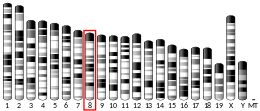
Human FCER2 genome location and FCER2 gene details page in the UCSC Genome Browser.
v
t
e
PDB gallery
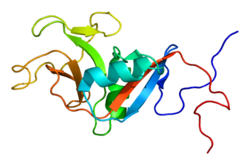
1t8c: Structure of the C-type lectin domain of CD23
1t8d: Structure of the C-type lectin domain of CD23
2h2r: Crystal structure of the human CD23 Lectin domain, apo form
2h2t: CD23 Lectin domain, Calcium 2+-bound
v
t
e
Proteins: clusters of differentiation (see also list of human clusters of differentiation)
This article includes a list of references, but its sources remain unclear because it has insufficient inline citations . Please help to improve this article by introducing more precise citations. (November 2014) (Learn how and when to remove this template message) The Westermarck effect , or reverse sexual imprinting, is a hypothetical psychological effect through which people who live in close domestic proximity during the first few years of their lives become desensitized to sexual attraction. This phenomenon was first hypothesized by Finnish anthropologist Edvard Westermarck in his book The History of Human Marriage (1891) as one explanation for the incest taboo. Observations interpreted as evidence for the Westermarck effect have since been made in many places and cultures, including in the Israeli kibbutz system, and the Chinese Shim-pua marriage customs, as well as in biologically-related families. In the case of the Israeli kibbutzim (collective farms), children...
"Italian restaurant" redirects here. For the television series, see Italian Restaurant. Some typical Italian gastronomic products in a window display in Imola Pizza is one of the world's most popular foods and a common fast food item Part of a series on the Culture of Italy History People Languages Traditions Mythology and folklore Mythology folklore Cuisine Festivals Religion Art Literature Music and performing arts Music Media Television Cinema Sport Monuments World Heritage Sites Symbols Flag Coat of arms Italy portal v t e Italian cuisine History Ancient Roman cuisine Medieval cuisine Early modern cuisine Contemporary cuisine Regional cuisines Apulian cuisine Lombard cuisine Neapolitan cuisine Roman cuisine Sicilian cuisine Venetian cuisine Cuisine of Abruzzo Cuisine of Sardinia Lists Chefs Dishes Pas...
In road bicycle racing, a Grand Tour is one of the three major European professional cycling stage races: Tour de France, Giro d'Italia and Vuelta a España. Collectively they are termed the Grand Tours , and all three races are similar in format being multi-week races with daily stages. They have a special status in the UCI regulations: more points for the UCI World Tour are distributed in Grand Tours than in other races, [1] and they are the only stage races allowed to last longer than 14 days. [2] The Giro d'Italia is generally run in May, the Tour de France in July, and the Vuelta a España in late August and September. The Vuelta was originally held in the spring, usually late April, with a few editions held in June in the 1940s. In 1995, however, the race moved to September to avoid direct competition with the Giro d'Italia, held in May. The Tour de France is the oldest and most prestigious in terms of points accrued to racers of all three, [1] , and is the most...