• epidermal growth factor receptor binding • protein binding • MHC class II protein complex binding
Cellular component
• integral component of membrane • plasma membrane • integral component of plasma membrane • extracellular exosome • membrane • external side of plasma membrane • extracellular space
Biological process
• B cell activation • B cell proliferation • humoral immune response
Sources:Amigo / QuickGO
Orthologs
Species
Human
Mouse
Entrez
931
12482
Ensembl
ENSG00000156738
ENSMUSG00000024673
UniProt
P11836
P19437
RefSeq (mRNA)
NM_152866 NM_021950
NM_007641
RefSeq (protein)
NP_068769 NP_690605
NP_031667
Location (UCSC)
Chr 11: 60.46 – 60.47 Mb
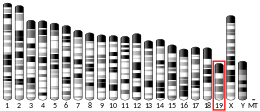
Chr 19: 11.25 – 11.27 Mb
PubMed search
[3]
[4]
Wikidata
View/Edit Human
View/Edit Mouse
B-lymphocyte antigen CD20 or CD20 is an activated-glycosylated phosphoprotein expressed on the surface of all B-cells beginning at the pro-B phase (CD45R+, CD117+) and progressively increasing in concentration until maturity.[5]
In humans CD20 is encoded by the MS4A1 gene.[6][7]
This gene encodes a member of the membrane-spanning 4A gene family. Members of this nascent protein family are characterized by common structural features and similar intron/exon splice boundaries and display unique expression patterns among hematopoietic cells and nonlymphoid tissues. This gene encodes a B-lymphocyte surface molecule that plays a role in the development and differentiation of B-cells into plasma cells. This family member is localized to 11q12, among a cluster of family members. Alternative splicing of this gene results in two transcript variants that encode the same protein.[7]
Contents
1Function
2Expression
3Clinical significance
4B cells, CD20, and diabetes mellitus
5References
6Further reading
7External links
Function
The protein has no known natural ligand[8] and its function is to enable optimal B-cell immune response, specifically against T-independent antigens.[9] It is suspected that it acts as a calcium channel in the cell membrane.
Expression
CD20 is expressed on all stages of B cell development except the first and last; it is present from late pro-B cells through memory cells, but not on either early pro-B cells or plasma blasts and plasma cells.[10][11] It is found on B-cell lymphomas, hairy cell leukemia, B-cell chronic lymphocytic leukemia, and melanoma cancer stem cells.[12]
Immunohistochemistry can be used to determine the presence of CD20 on cells in histological tissue sections. Because CD20 remains present on the cells of most B-cell neoplasms, and is absent on otherwise similar appearing T-cell neoplasms, it can be very useful in diagnosing conditions such as B-cell lymphomas and leukaemias. However, the presence or absence of CD20 in such tumours is not relevant to prognosis, with the progression of the disease being much the same in either case. CD20 positive cells are also sometimes found in cases of Hodgkins disease, myeloma, and thymoma.[13]
Antibody FMC7 (Flinder Medical Centre) appears to recognise a conformational variant of CD20[14][15] also known as the FMC7 antigen.[16]
Clinical significance
It has been suggested that this section be split out into another article titled CD20 antagonist. (Discuss) (November 2015)
CD20 is the target of the monoclonal antibodies rituximab, ocrelizumab, obinutuzumab, ofatumumab, ibritumomab tiuxetan, tositumomab, and ublituximab, which are all active agents in the treatment of all B cell lymphomas, leukemias, and B cell-mediated autoimmune diseases.
The anti-CD20 mAB ofatumumab (Genmab) was approved by FDA in October 2009 for chronic lymphocytic leukemia.
The anti-CD20 mAB obinutuzumab (Gazyva) was approved by FDA in November 2013 for chronic lymphocytic leukemia.
Additional anti-CD20 antibody therapeutics under development (phase II or III clinical trials in 2008) include :
Obinutuzumab for systemic lupus erythematosus,
Rituximab for myalgic encephalomyelitis
Ocaratuzumab for follicular lymphoma and rheumatoid arthritis,
Ocrelizumab for multiple sclerosis (rheumatoid arthritis discontinued in 2010),
TRU-015 (by Trubion), (discontinued in 2010[17])
IMMU-106 (veltuzumab).[18] for non-Hodgkin's lymphoma or (2015) immune thrombocytopenia.
B cells, CD20, and diabetes mellitus
A link between the immune system's B cells and diabetes mellitus has been determined.[19] In cases of obesity, the presence of fatty tissues surrounding the body's major organ systems results in cell necrosis and insulin desensitivity along the boundary between them. Eventually, the contents of fat cells that would otherwise have been digested by insulin are shed into the bloodstream. An inflammation response that mobilizes both T and B cells results in the creation of antibodies against these cells, causing them to become less responsive to insulin by an as-yet unknown mechanism and promoting hypertension, hypertriglyceridemia, and arteriosclerosis, hallmarks of the metabolic syndrome. Obese mice administered anti-B cell CD-20 antibodies, however, did not become less responsive to insulin and as a result did not develop diabetes mellitus or the metabolic syndrome, the posited mechanism being that anti-CD20 antibodies rendered the T cell antibodies dysfunctional and therefore powerless to cause insulin desensitivity by a B cell antibody-modulated autoimmune response. The protection afforded by anti-CD-20 lasted approximately forty days—the time it takes the body to replenish its supply of B cells—after which repetition was necessary to restore it. Hence, it has been argued that diabetes mellitus be reclassified as an autoimmune disease rather than a purely metabolic one and focus treatment for it on immune system modulation.[19]
References
^ abcGRCh38: Ensembl release 89: ENSG00000156738 - Ensembl, May 2017
^ abcGRCm38: Ensembl release 89: ENSMUSG00000024673 - Ensembl, May 2017
^Hardy, Richard (2008). "Chapter 7: B Lymphocyte Development and Biology". In Paul, William. Fundamental Immunology (Book) (6th ed.). Philadelphia: Lippincott Williams & Wilkins. pp. 237–269. ISBN 0-7817-6519-6.
^Tedder TF, Streuli M, Schlossman SF, Saito H (January 1988). "Isolation and structure of a cDNA encoding the B1 (CD20) cell-surface antigen of human B lymphocytes". Proceedings of the National Academy of Sciences of the United States of America. 85 (1): 208–12. doi:10.1073/pnas.85.1.208. PMC 279513. PMID 2448768.
^ ab"Entrez Gene: MS4A1 membrane-spanning 4-domains, subfamily A, member 1".
^Cragg MS, Walshe CA, Ivanov AO, Glennie MJ (2005). "The biology of CD20 and its potential as a target for mAb therapy". Current Directions in Autoimmunity. Current Directions in Autoimmunity. 8: 140–74. doi:10.1159/000082102. ISBN 3-8055-7851-2. PMID 15564720.
^Kuijpers TW, Bende RJ, Baars PA, Grummels A, Derks IA, Dolman KM, Beaumont T, Tedder TF, van Noesel CJ, Eldering E, van Lier RA (January 2010). "CD20 deficiency in humans results in impaired T cell-independent antibody responses" (PDF). The Journal of Clinical Investigation. 120 (1): 214–22. doi:10.1172/JCI40231. PMC 2798692. PMID 20038800.
^Walport M, Murphy K, Janeway C, Travers PJ (2008). Janeway's Immunobiology (7th ed.). New York: Garland Science. ISBN 0-8153-4123-7.
^Bonilla FA, Bona CA (1996). "5". Textbook of Immunology. Boca Raton: CRC. p. 102. ISBN 3-7186-0596-1.
^Fang D, Nguyen TK, Leishear K, Finko R, Kulp AN, Hotz S, Van Belle PA, Xu X, Elder DE, Herlyn M (October 2005). "A tumorigenic subpopulation with stem cell properties in melanomas". Cancer Research. 65 (20): 9328–37. doi:10.1158/0008-5472.CAN-05-1343. PMID 16230395.
^Cooper K, Anthony Leong AS-Y (2003). Manual of diagnostic antibodies for immunohistology (2nd ed.). London: Greenwich Medical Media. ISBN 1-84110-100-1.
^Polyak MJ, Ayer LM, Szczepek AJ, Deans JP (July 2003). "A cholesterol-dependent CD20 epitope detected by the FMC7 antibody". Leukemia. 17 (7): 1384–9. doi:10.1038/sj.leu.2402978. PMID 12835728.
^Serke S, Schwaner I, Yordanova M, Szczepek A, Huhn D (April 2001). "Monoclonal antibody FMC7 detects a conformational epitope on the CD20 molecule: evidence from phenotyping after rituxan therapy and transfectant cell analyses". Cytometry. 46 (2): 98–104. doi:10.1002/cyto.1071. PMID 11309819.
^Deans JP, Polyak MJ (February 2008). "FMC7 is an epitope of CD20". Blood. 111 (4): 2492, author reply 2493–4. doi:10.1182/blood-2007-11-126243. PMID 18263793.
^"Trubion announces Pfizer's decision to discontinue development of TRU-015 for RA". Trubion Pharmaceuticals, Inc. press release. 15 June 2010.
^Note: information included in this article only found in table present in print version of article. K. John Morrow Jr (2008-06-15). "Methods for Maximizing Antibody Yields". Genetic Engineering & Biotechnology News. Mary Ann Liebert, Inc. p. 36. Retrieved 2008-07-06.
^ abWiner DA, Winer S, Shen L, Wadia PP, Yantha J, Paltser G, Tsui H, Wu P, Davidson MG, Alonso MN, Leong HX, Glassford A, Caimol M, Kenkel JA, Tedder TF, McLaughlin T, Miklos DB, Dosch HM, Engleman EG (May 2011). "B cells promote insulin resistance through modulation of T cells and production of pathogenic IgG antibodies". Nature Medicine. 17 (5): 610–7. doi:10.1038/nm.2353. PMC 3270885. PMID 21499269. Lay summary – Stanford School of Medicine.
Macardle PJ, Nicholson IC (2003). "CD20". Journal of Biological Regulators and Homeostatic Agents. 16 (2): 136–8. PMID 12144126.
Tamayose K, Sato N, Ando J, Sugimoto K, Oshimi K (December 2002). "CD3-negative, CD20-positive T-cell prolymphocytic leukemia: case report and review of the literature". American Journal of Hematology. 71 (4): 331–5. doi:10.1002/ajh.10224. PMID 12447967.
Küster H, Zhang L, Brini AT, MacGlashan DW, Kinet JP (June 1992). "The gene and cDNA for the human high affinity immunoglobulin E receptor beta chain and expression of the complete human receptor". The Journal of Biological Chemistry. 267 (18): 12782–7. PMID 1535625.
Einfeld DA, Brown JP, Valentine MA, Clark EA, Ledbetter JA (March 1988). "Molecular cloning of the human B cell CD20 receptor predicts a hydrophobic protein with multiple transmembrane domains". The EMBO Journal. 7 (3): 711–7. PMC 454379. PMID 2456210.
Tedder TF, Disteche CM, Louie E, Adler DA, Croce CM, Schlossman SF, Saito H (April 1989). "The gene that encodes the human CD20 (B1) differentiation antigen is located on chromosome 11 near the t(11;14)(q13;q32) translocation site". Journal of Immunology. 142 (7): 2555–9. PMID 2466898.
Tedder TF, Klejman G, Schlossman SF, Saito H (April 1989). "Structure of the gene encoding the human B lymphocyte differentiation antigen CD20 (B1)". Journal of Immunology. 142 (7): 2560–8. PMID 2466899.
Loken MR, Shah VO, Dattilio KL, Civin CI (November 1987). "Flow cytometric analysis of human bone marrow. II. Normal B lymphocyte development". Blood. 70 (5): 1316–24. PMID 3117132.
Stamenkovic I, Seed B (June 1988). "Analysis of two cDNA clones encoding the B lymphocyte antigen CD20 (B1, Bp35), a type III integral membrane protein". The Journal of Experimental Medicine. 167 (6): 1975–80. doi:10.1084/jem.167.6.1975. PMC 2189672. PMID 3260267.
Bofill M, Janossy G, Janossa M, Burford GD, Seymour GJ, Wernet P, Kelemen E (March 1985). "Human B cell development. II. Subpopulations in the human fetus". Journal of Immunology. 134 (3): 1531–8. PMID 3871452.
Deans JP, Kalt L, Ledbetter JA, Schieven GL, Bolen JB, Johnson P (September 1995). "Association of 75/80-kDa phosphoproteins and the tyrosine kinases Lyn, Fyn, and Lck with the B cell molecule CD20. Evidence against involvement of the cytoplasmic regions of CD20". The Journal of Biological Chemistry. 270 (38): 22632–8. doi:10.1074/jbc.270.38.22632. PMID 7545683.
Valentine MA, Licciardi KA, Clark EA, Krebs EG, Meier KE (January 1993). "Insulin regulates serine/threonine phosphorylation in activated human B lymphocytes". Journal of Immunology. 150 (1): 96–105. PMID 7678037.
Bubien JK, Zhou LJ, Bell PD, Frizzell RA, Tedder TF (June 1993). "Transfection of the CD20 cell surface molecule into ectopic cell types generates a Ca2+ conductance found constitutively in B lymphocytes". The Journal of Cell Biology. 121 (5): 1121–32. doi:10.1083/jcb.121.5.1121. PMC 2119683. PMID 7684739.
Shirakawa T, Li A, Dubowitz M, Dekker JW, Shaw AE, Faux JA, Ra C, Cookson WO, Hopkin JM (June 1994). "Association between atopy and variants of the beta subunit of the high-affinity immunoglobulin E receptor". Nature Genetics. 7 (2): 125–9. doi:10.1038/ng0694-125. PMID 7920628.
Maruyama K, Sugano S (January 1994). "Oligo-capping: a simple method to replace the cap structure of eukaryotic mRNAs with oligoribonucleotides". Gene. 138 (1–2): 171–4. doi:10.1016/0378-1119(94)90802-8. PMID 8125298.
Szepetowski P, Perucca-Lostanlen D, Gaudray P (June 1993). "Mapping genes according to their amplification status in tumor cells: contribution to the map of 11q13". Genomics. 16 (3): 745–50. doi:10.1006/geno.1993.1257. PMID 8325649.
Algino KM, Thomason RW, King DE, Montiel MM, Craig FE (July 1996). "CD20 (pan-B cell antigen) expression on bone marrow-derived T cells". American Journal of Clinical Pathology. 106 (1): 78–81. doi:10.1093/ajcp/106.1.78. PMID 8701937.
Szöllósi J, Horejsí V, Bene L, Angelisová P, Damjanovich S (October 1996). "Supramolecular complexes of MHC class I, MHC class II, CD20, and tetraspan molecules (CD53, CD81, and CD82) at the surface of a B cell line JY". Journal of Immunology. 157 (7): 2939–46. PMID 8816400.
Kanzaki M, Lindorfer MA, Garrison JC, Kojima I (June 1997). "Activation of the calcium-permeable cation channel CD20 by alpha subunits of the Gi protein". The Journal of Biological Chemistry. 272 (23): 14733–9. doi:10.1074/jbc.272.23.14733. PMID 9169438.
Suzuki Y, Yoshitomo-Nakagawa K, Maruyama K, Suyama A, Sugano S (October 1997). "Construction and characterization of a full length-enriched and a 5'-end-enriched cDNA library". Gene. 200 (1–2): 149–56. doi:10.1016/S0378-1119(97)00411-3. PMID 9373149.
External links
CD20+antigen at the US National Library of Medicine Medical Subject Headings (MeSH)
representations of the shape are found here and more detail here
Human MS4A1 genome location and MS4A1 gene details page in the UCSC Genome Browser.
Human MS4A2 genome location and MS4A2 gene details page in the UCSC Genome Browser.
v
t
e
Proteins: clusters of differentiation (see also list of human clusters of differentiation)
1-50
CD1
a-c
1A
1D
1E
CD2
CD3
γ
δ
ε
CD4
CD5
CD6
CD7
CD8
a
CD9
CD10
CD11
a
b
c
d
CD13
CD14
CD15
CD16
A
B
CD18
CD19
CD20
CD21
CD22
CD23
CD24
CD25
CD26
CD27
CD28
CD29
CD30
CD31
CD32
A
B
CD33
CD34
CD35
CD36
CD37
CD38
CD39
CD40
CD41
CD42
a
b
c
d
CD43
CD44
CD45
CD46
CD47
CD48
CD49
a
b
c
d
e
f
CD50
51-100
CD51
CD52
CD53
CD54
CD55
CD56
CD57
CD58
CD59
CD61
CD62
E
L
P
CD63
CD64
A
B
C
CD66
a
b
c
d
e
f
CD68
CD69
CD70
CD71
CD72
CD73
CD74
CD78
CD79
a
b
CD80
CD81
CD82
CD83
CD84
CD85
a
d
e
h
j
k
CD86
CD87
CD88
CD89
CD90
CD91 - CD92
CD93
CD94
CD95
CD96
CD97
CD98
CD99
CD100
101-150
CD101
CD102
CD103
CD104
CD105
CD106
CD107
a
b
CD108
CD109
CD110
CD111
CD112
CD113
CD114
CD115
CD116
CD117
CD118
CD119
CD120
a
b
CD121
a
b
CD122
CD123
CD124
CD125
CD126
CD127
CD129
CD130
CD131
CD132
CD133
CD134
CD135
CD136
CD137
CD138
CD140b
CD141
CD142
CD143
CD144
CD146
CD147
CD148
CD150
151-200
CD151
CD152
CD153
CD154
CD155
CD156
a
b
c
CD157
CD158 (a
d
e
i
k)
CD159
a
c
CD160
CD161
CD162
CD163
CD164
CD166
CD167
a
b
CD168
CD169
CD170
CD171
CD172
a
b
g
CD174
CD177
CD178
CD179
a
b
CD180
CD181
CD182
CD183
CD184
CD185
CD186
CD191
CD192
CD193
CD194
CD195
CD196
CD197
CDw198
CDw199
CD200
201-250
CD201
CD202b
CD204
CD205
CD206
CD207
CD208
CD209
CDw210
a
b
CD212
CD213a
1
2
CD217
CD218 (a
b)
CD220
CD221
CD222
CD223
CD224
CD225
CD226
CD227
CD228
CD229
CD230
CD233
CD234
CD235
a
b
CD236
CD238
CD239
CD240CE
CD240D
CD241
CD243
CD244
CD246
CD247 - CD248
CD249
251-300
CD252
CD253
CD254
CD256
CD257
CD258
CD261
CD262
CD263
CD264
CD265
CD266
CD267
CD268
CD269
CD271
CD272
CD273
CD274
CD275
CD276
CD278
CD279
CD280
CD281
CD282
CD283
CD284
CD286
CD288
CD289
CD290
CD292
CDw293
CD294
CD295
CD297
CD298
CD299
301-350
CD300A
CD301
CD302
CD303
CD304
CD305
CD306
CD307
CD309
CD312
CD314
CD315
CD316
CD317
CD318
CD320
CD321
CD322
CD324
CD325
CD326
CD328
CD329
CD331
CD332
CD333
CD334
CD335
CD336
CD337
CD338
CD339
CD340
CD344
CD349
CD350
v
t
e
Cluster of differentiation by lineage
Lymphoid
B cell
Pre-B cell: CD10/CALLA
CD79A
mature: CD19
CD20
CD21/CR2
CD23/FcεRII
CD127
CD40
plasma cell: CD38
CD138
T/NK
T cell
Pan-T antigens: CD3
CD7
CD1
CD4
CD8
CD13
CD18
CD26
CD27
CD28
NK cell
CD16
CD56/NCAM
CD57
All
CD2
All
CD5
Myeloid
CFU-GM/ Myelomonocyte
CD11c
CD14
CD15
CD31
CD64
CD68
MEP
CFU-Meg
CD34/CD36
CD42
CD41/CD61
CFU-E
CD36
CD71
All (pan-myeloid)
CD13
CD33
Stem cell
CD34
v
t
e
Protein: cell membrane proteins (other than Cell surface receptor, enzymes, and cytoskeleton)
This article includes a list of references, but its sources remain unclear because it has insufficient inline citations . Please help to improve this article by introducing more precise citations. (November 2014) (Learn how and when to remove this template message) The Westermarck effect , or reverse sexual imprinting, is a hypothetical psychological effect through which people who live in close domestic proximity during the first few years of their lives become desensitized to sexual attraction. This phenomenon was first hypothesized by Finnish anthropologist Edvard Westermarck in his book The History of Human Marriage (1891) as one explanation for the incest taboo. Observations interpreted as evidence for the Westermarck effect have since been made in many places and cultures, including in the Israeli kibbutz system, and the Chinese Shim-pua marriage customs, as well as in biologically-related families. In the case of the Israeli kibbutzim (collective farms), children...
"Italian restaurant" redirects here. For the television series, see Italian Restaurant. Some typical Italian gastronomic products in a window display in Imola Pizza is one of the world's most popular foods and a common fast food item Part of a series on the Culture of Italy History People Languages Traditions Mythology and folklore Mythology folklore Cuisine Festivals Religion Art Literature Music and performing arts Music Media Television Cinema Sport Monuments World Heritage Sites Symbols Flag Coat of arms Italy portal v t e Italian cuisine History Ancient Roman cuisine Medieval cuisine Early modern cuisine Contemporary cuisine Regional cuisines Apulian cuisine Lombard cuisine Neapolitan cuisine Roman cuisine Sicilian cuisine Venetian cuisine Cuisine of Abruzzo Cuisine of Sardinia Lists Chefs Dishes Pas...
In road bicycle racing, a Grand Tour is one of the three major European professional cycling stage races: Tour de France, Giro d'Italia and Vuelta a España. Collectively they are termed the Grand Tours , and all three races are similar in format being multi-week races with daily stages. They have a special status in the UCI regulations: more points for the UCI World Tour are distributed in Grand Tours than in other races, [1] and they are the only stage races allowed to last longer than 14 days. [2] The Giro d'Italia is generally run in May, the Tour de France in July, and the Vuelta a España in late August and September. The Vuelta was originally held in the spring, usually late April, with a few editions held in June in the 1940s. In 1995, however, the race moved to September to avoid direct competition with the Giro d'Italia, held in May. The Tour de France is the oldest and most prestigious in terms of points accrued to racers of all three, [1] , and is the most...