Wally Heider Studios
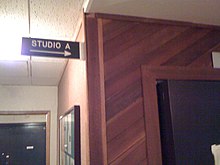 Studio A, Hyde Street Studios (formerly Wally Heider Studios) | |
| Industry | Recording studio |
|---|---|
| Successor |
|
| Founded | United States (1960s (1960s)) |
| Founder | Wally Heider |
| Defunct | 1980 (1980) |
| Headquarters | California , United States |
Wally Heider Studios was a recording studio in San Francisco, California between 1969[1] and 1980, started by recording engineer and studio owner Wally Heider.
In 1978, Heider sold the studio and its name to Filmways, but remained as manager[2] until 1980 when Filmways sold it to a partnership composed of Dan Alexander, Tom Sharples, and Michael Ward. The three partners renamed the business Hyde Street Studios, which is still an operating recording studio as of 2013, now owned solely by Michael Ward.[3]
Contents
1 History
2 Wally Heider Recording, Hollywood
3 Albums recorded
3.1 1969
3.2 1970
3.3 1971
3.4 1972
3.5 1973
3.6 1974
3.7 1975
3.8 1976
3.9 1977
3.10 1978
3.11 1979
3.12 1981
3.13 1982
4 References
History
In early 1969, Heider opened Wally Heider's Studio at 245 Hyde Street, San Francisco, between Turk and Eddy Streets, across the street from Black Hawk jazz club, in a building that had previously been used by 20th Century Fox for film offices, screening rooms and storage[1][4] Heider had reportedly apprenticed as an assistant and mixer at United Western Recorders in Hollywood, CA, with Bill Putnam, The Father of Modern Recording,[5]
and he already owned and ran an independent recording studio and remote recording setup called Wally Heider Recording, in Hollywood, California, which was one of the most successful such operations in the world.[1]
Heider and his crew were very well known for making excellent studio and remote location recordings and for top notch engineering. Two years earlier, in 1967, Heider had been involved in live recording at the Monterey Pop Festival. Artists like Jefferson Airplane, Quicksilver Messenger Service and The Grateful Dead had been recording in Los Angeles and New York, and Heider saw the need for musicians involved in the nascent San Francisco Sound to have their own well equipped and staffed recording studio close to home. The studios were built by Dave Mancini, who later built his own studio in the San Fernando Valley.[1]
Heider planned four studios—A and B on the ground floor and C and D upstairs. However, studio B was never finished and instead became a game room.
Frank DeMedio built all the studios' custom gear and consoles, using Universal Audio (UA) console components, military grade switches and level controls, and a simple audio path that used one preamp for everything in a channel. He designed the console with 24 channels and an 8-channel monitor and cue—replicated in both the Studio 3 setup in Los Angeles and the remote truck. Monitor speakers were Altec 604-Es with McIntosh 275 tube power amps.[1]
They completed Studio C first and it began operating in May 1969 with staff that included General Manager Mel Tanner, Booking Agent Ginger Mews, Technician Harry Sitam, and Staff Engineer Russ Gary. Its dimensions were similar to Heider's Studio 3 in Hollywood—though its control room, instead of being at the end the room, was parallel to Studio C's long side. The walls were kept from being parallel with square gypsum devices that were used as mid-range sound diffusers and absorbers. At the Grateful Dead's request, its studio doors were covered with airbrushed paintings. Studios A and D became operational a few months later.[6]
According to researchers who later explored studio history for Hyde Street Studios, the first release out of studio C was the Jefferson Airplane’s Volunteers, which was also the first album they recorded in their hometown. Between 1969 and 1970, many other high-profile acts followed, including Harry Nilsson, Crosby Stills Nash and Young, the Steve Miller Band. Creedence Clearwater Revival recorded several albums in that room, and named their record, Cosmo's Factory after the "factory" at Studio C (Cosmo's Factory was CCR's rehearsal area.). Engineers and staff of that era also included Bill Halverson, Stephen Barncard, and Glyn Johns.[6]
While Crosby Stills Nash and Young were recording, studio D opened. It was an exact replica of Heider's Hollywood Studio 3. Among its first uses was to record Jerry Garcia’s steel guitar overdub for Teach Your Children, while the live recording setup was kept intact in studio C, where CSNY recorded. In that same period, Deane Jensen supervised installation of a new Quad Eight console in studio A. Santana and John Hall used studio D a few times. CBS Records had a priority lease on Studio D for a year, before eventually taking over Coast Recorders as their west coast recording facility.[7] Many other artists followed.
Wally Heider Recording, Hollywood
Wally Heider Recording, 1604 N. Cahuenga Blvd., Hollywood[8][9][10][11][12][13][14][15]
also known as Wally Heider's Studio 3, 6371 Selma Ave, Los Angeles[16] also known as Filmways-Heider Recording, 1604 N. Cahuenga Blvd., Hollywood[17][18]
Albums recorded
1969
Volunteers by Jefferson Airplane
Green River by Creedence Clearwater Revival
Shady Grove by Quicksilver Messenger Service
Zephyr by Zephyr
Neil Young by Neil Young
Everybody Knows This Is Nowhere by Neil Young with Crazy Horse
1970
Déjà Vu by Crosby, Stills, Nash & Young
Eric Burdon Declares "War" by Eric Burdon and War
Abraxas by Santana [19]
Blows Against the Empire by Paul Kantner
American Beauty by The Grateful Dead
Portrait by The 5th Dimension
The Black-Man's Burdon by Eric Burdon and War
Cosmo's Factory by Creedence Clearwater Revival
Tarkio by Brewer & Shipley
Pendulum by Creedence Clearwater Revival
The Original Human Being by Blue Cheer
1971
Bark by Jefferson Airplane
Sunfighter by Paul Kantner and Grace Slick
Chilliwack by Chilliwack
Electric Warrior by T. Rex
If I Could Only Remember My Name by David Crosby
Songs for Beginners by Graham Nash
Tupelo Honey by Van Morrison
Shake Off the Demon by Brewer & Shipley
Guilty! by Eric Burdon & Jimmy Witherspoon
Grin by Grin
Papa John Creach by Papa John Creach
Moments by Boz Scaggs
Endless Boogie by John Lee Hooker
Mwandishi by Herbie Hancock
1972
Graham Nash David Crosby by Crosby & Nash
Long John Silver by Jefferson Airplane
Burgers by Hot Tuna
First Taste of Sin by Cold Blood
1+1 by Grin
Rural Space by Brewer & Shipley
Come by 1
Saint Dominic's Preview by Van Morrison
Toulouse Street by The Doobie Brothers
Garcia by Jerry Garcia
Ace by Bob Weir
1973
Byrds by The Byrds
Head Hunters by Herbie Hancock
Baron von Tollbooth & The Chrome Nun by Paul Kantner, Grace Slick, and David Freiberg
Full Sail by Loggins and Messina
How Time Flys by David Ossman and The Firesign Theatre
GP by Gram Parsons
Deliver the Word by War
Be What You Want To by Link Wray
Betty Davis by Betty Davis
Sextant by Herbie Hancock
Roger McGuinn by Roger McGuinn
1974
Grievous Angel by Gram Parsons
Manhole by Grace Slick
The Phosphorescent Rat by Hot Tuna
Early Flight by Jefferson Airplane
Dragon Fly by Grace Slick, Paul Kantner, and Jefferson Starship
Quah by Jorma Kaukonen
What Were Once Vices Are Now Habits by The Doobie Brothers
ST11621 by Brewer & Shipley
Look at the Fool by Tim Buckley
The Heart of Saturday Night by Tom Waits
Southern Comfort by The Crusaders
Peace on You by Roger McGuinn
No Other by Gene Clark
1975
America's Choice by Hot Tuna
Red Octopus by Jefferson Starship
Yellow Fever by Hot Tuna
The Tubes by The Tubes
Tale Spinnin' by Weather Report
Chain Reaction by The Crusaders
Adventures in Paradise by Minnie Riperton
Atlantic Crossing by Rod Stewart
Song for America by Kansas
Saturday Night Special by Norman Connors
Steppin' by Pointer Sisters
Venus and Mars by Wings
Coke by Coke Escovedo
Angel by Angel
Tell Me The Truth by Jon Hendricks
An Evening with John Denver by John Denver (Recorded Live at Universal Amphitheater)
1976
Spitfire by Jefferson Starship
Heritage by Eddie Henderson
Hoppkorv by Hot Tuna
Amigos by Santana
Small Change by Tom Waits
Salongo by Ramsey Lewis
Alessi by Alessi Brothers
Legs Diamond by Legs Diamond
1977
Rumours by Fleetwood Mac
Thunderbyrd by Roger McGuinn
Conquistador by Maynard Ferguson
American Stars 'n Bars by Neil Young
Having a Party by Pointer Sisters
Donald Clark Osmond by Donny Osmond
1978
Earth by Jefferson Starship
Double Dose by Hot Tuna
Do It All Night by Curtis Mayfield
Comes a Time by Neil Young
Jass-Ay-Lay-Dee by Ohio Players
Streamline by Lenny White
Twin Sons of Different Mothers by Dan Fogelberg and Tim Weisberg
1979
Jorma by Jorma Kaukonen
Connections and Disconnections by Funkadelic
1981
Law and Order by Lindsey Buckingham
1982
One from the Heart by Tom Waits and Crystal Gayle
Right Back At Cha! by Dynasty
Long After Dark by Tom Petty and the Heartbreakers
References
^ abcde "Hyde Street Studios History: Early Years p.2". Retrieved 2017-02-17..mw-parser-output cite.citation{font-style:inherit}.mw-parser-output .citation q{quotes:"""""""'""'"}.mw-parser-output .citation .cs1-lock-free a{background:url("//upload.wikimedia.org/wikipedia/commons/thumb/6/65/Lock-green.svg/9px-Lock-green.svg.png")no-repeat;background-position:right .1em center}.mw-parser-output .citation .cs1-lock-limited a,.mw-parser-output .citation .cs1-lock-registration a{background:url("//upload.wikimedia.org/wikipedia/commons/thumb/d/d6/Lock-gray-alt-2.svg/9px-Lock-gray-alt-2.svg.png")no-repeat;background-position:right .1em center}.mw-parser-output .citation .cs1-lock-subscription a{background:url("//upload.wikimedia.org/wikipedia/commons/thumb/a/aa/Lock-red-alt-2.svg/9px-Lock-red-alt-2.svg.png")no-repeat;background-position:right .1em center}.mw-parser-output .cs1-subscription,.mw-parser-output .cs1-registration{color:#555}.mw-parser-output .cs1-subscription span,.mw-parser-output .cs1-registration span{border-bottom:1px dotted;cursor:help}.mw-parser-output .cs1-ws-icon a{background:url("//upload.wikimedia.org/wikipedia/commons/thumb/4/4c/Wikisource-logo.svg/12px-Wikisource-logo.svg.png")no-repeat;background-position:right .1em center}.mw-parser-output code.cs1-code{color:inherit;background:inherit;border:inherit;padding:inherit}.mw-parser-output .cs1-hidden-error{display:none;font-size:100%}.mw-parser-output .cs1-visible-error{font-size:100%}.mw-parser-output .cs1-maint{display:none;color:#33aa33;margin-left:0.3em}.mw-parser-output .cs1-subscription,.mw-parser-output .cs1-registration,.mw-parser-output .cs1-format{font-size:95%}.mw-parser-output .cs1-kern-left,.mw-parser-output .cs1-kern-wl-left{padding-left:0.2em}.mw-parser-output .cs1-kern-right,.mw-parser-output .cs1-kern-wl-right{padding-right:0.2em}
^ "Hyde Street Studios History: The Next Step". Retrieved 2017-02-17.
^ "Hyde Street Studios History: Turnabout". Retrieved 2017-02-17.
^ http://wallyheider.com/wordpress/firstinstudioc/
^ "Hyde Street Studios History: Early Years p.1". Retrieved 2017-02-17.
^ ab "Hyde Street Studios History: Early Years p.3". Retrieved 2017-02-17.
^ "Hyde Street Studios History: Early Years p.4". Retrieved 2017-02-17.
^ http://www.soundonsound.com/people/crosby-stills-nash-suite-judy-blue-eyes-classic-tracks
^ http://onlyinhollywood.org/teye-caffe-etc/
^ https://books.google.com/books?id=lAkEAAAAMBAJ&pg=PA32-IA19&lpg=PA32-IA19&dq=%22Wally%20Heider%20Recording%22
^ https://bizstanding.com/p/wally+heider+recording-164400445
^ http://www.americanradiohistory.com/Archive-Record-World/70s/75/RW-1975-07-19-Annual.pdf
^ http://libraryarchives.metro.net/DPGTL/eirs/1983_historical_architectural_resources_metro_rail_deis_eir.pdf
^ http://www.americanradiohistory.com/Archive-Record-World/70s/70/RW-1970-07-25.pdf
^ http://www.americanradiohistory.com/Archive-Record-World/70s/74/RW-1974-07-20.pdf
^ http://patch.com/california/hollywood/wally-heider-studio-3
^ https://books.google.com/books?id=FjTECwAAQBAJ&pg=PA431&lpg=PA431&dq=Filmways-Heider+Recording+1604+N.+Cahuenga+Blvd
^ https://www.google.com/maps/dir/6371+Selma+Ave,+Los+Angeles,+CA/1604+N+Cahuenga+Blvd,+Los+Angeles,+CA+90028/@34.0999051,-118.3315302,17z/?hl=en
^ https://books.google.com/books?id=eikEAAAAMBAJ&pg=PA55&dq=Hyde+Street
 | Wikimedia Commons has media related to Hyde Street Studios. |


