Germania Inferior
 | This article includes a list of references, related reading or external links, but its sources remain unclear because it lacks inline citations. (January 2013) (Learn how and when to remove this template message) |
.mw-parser-output .smallcaps{font-variant:small-caps} Provincia Germania Inferior | |||||
Province of the Roman Empire | |||||
| |||||
 | |||||
Capital | Colonia Claudia Ara Agrippinensium (CCAA) | ||||
Historical era | Antiquity | ||||
| • | Established after the Gallic wars | 83 | |||
| • | Gallic Empire | 260-274 | |||
| • | Frankish Empire | 475 | |||
Today part of |  Netherlands Netherlands Belgium Belgium Germany Germany Luxembourg Luxembourg | ||||


The Roman empire in the time of Hadrian (ruled 117-138), showing, on the lower Rhine river, the imperial province of Germania Inferior (NW Germany/S. Netherlands, E. Belgium), and the 3 legions deployed there in 125. Note that the coast lines shown in the map are those of today, known to be different from those in Roman times in the North Sea area.
Germania Inferior ("Lower Germany") was a Roman province located on the west bank of the Rhine. According to Ptolemy (2.9), Germania Inferior included the Rhine from its mouth up to the mouth of the Obringa, a river identified with either the Aar or the Moselle.
[1]
The territory included modern Luxembourg, the southern Netherlands, part of Belgium, and part of North Rhine-Westphalia in Germany, west of the Rhine.
The principal settlements of the province were Castra Vetera and Colonia Ulpia Traiana (both near Xanten), Coriovallum (Heerlen), Albaniana (Alphen aan den Rijn), Lugdunum Batavorum (Katwijk), Forum Hadriani (Voorburg), Ulpia Noviomagus Batavorum (Nijmegen), Traiectum (Utrecht), Atuatuca Tungrorum (Tongeren), Bona (Bonn), and Colonia Agrippinensis (Cologne), the capital of Germania Inferior.
Contents
1 History
2 See also
3 References
4 External links
History
The army of Germania Inferior, typically shown on inscriptions as EX.GER.INF. (Exercitus Germaniae Inferioris), included several legions at various times: of these, Legions I Minervia and XXX Ulpia Victrix were the most permanent. The Roman Navy's Classis Germanica (German fleet), charged with patrolling the Rhine and the North Sea coast, was based at Castra Vetera and later at Colonia Agrippinensis.
The first confrontations between a Roman army and the peoples of Germania Inferior occurred during Julius Caesar's Gallic Wars. Caesar invaded the region in 57 BC and in the next three years annihilated several tribes, including the Eburones and the Menapii, whom Caesar called "Germanic" but who probably were Celtic or at least mixed Celtic-Germanic. Germanic influence (mainly through the Tungri) increased during Roman times, leading to the assimilation of all Celtic peoples in the area.[citation needed]
Germania Inferior had Roman settlements since around 50 BC and was at first part of Gallia Belgica. Although it had been occupied since the reign of Augustus, it wasn't formally established as a Roman province until around AD 85, with its capital at Colonia Claudia Ara Agrippinensium (modern Cologne).[2] It later became an Imperial province. It lay north of Germania Superior; these two together made up Lesser Germania. The adjective Inferior refers to its downstream position.
As attested in the early 5th century Notitia Dignitatum, the province was renamed Germania Secunda (Germania II) in the 4th century. It was administered by a consularis and formed part of the Diocese of Gaul. Up to the end of Roman control, it was an intensely garrisoned province that was inhabited by Romans and Ripuarian Franks in the 5th century. Its capital remained at Colonia Claudia Ara Agrippinensium, which also became the seat of a Christian bishopric, in charge of an ecclesiastical province that survived the fall of the Western Roman Empire.
After the final abandonment of the province it became the core of the Frankish Kingdom.
See also
- List of Roman governors of Germania Inferior
Revolt of the Batavi, a major uprising against Roman rule
Germanicus, the role of Germania Inferior in Roman politics- Roman Britain's continental trade
- Germania
References
| This article includes a list of references, but its sources remain unclear because it has insufficient inline citations. (December 2016) (Learn how and when to remove this template message) |
^ "Obringa" in Bruzen la Martiniere, Le Grand Dictionnaire Geographique Volume 6, 1737;
Albert Forbiger, Handbuch Der Alten Geographie Volume 3, Mayer und Wigand, 1848, fn (***) p. 126f.
^
Rüger, C. (2004) [1996]. "Germany". In Alan K. Bowman; Edward Champlin; Andrew Lintott. The Cambridge Ancient History: X, The Augustan Empire, 43 B.C. - A.D. 69. 10 (2nd ed.). Cambridge University Press. pp. 527–528. ISBN 0-521-26430-8..mw-parser-output cite.citation{font-style:inherit}.mw-parser-output q{quotes:"""""""'""'"}.mw-parser-output code.cs1-code{color:inherit;background:inherit;border:inherit;padding:inherit}.mw-parser-output .cs1-lock-free a{background:url("//upload.wikimedia.org/wikipedia/commons/thumb/6/65/Lock-green.svg/9px-Lock-green.svg.png")no-repeat;background-position:right .1em center}.mw-parser-output .cs1-lock-limited a,.mw-parser-output .cs1-lock-registration a{background:url("//upload.wikimedia.org/wikipedia/commons/thumb/d/d6/Lock-gray-alt-2.svg/9px-Lock-gray-alt-2.svg.png")no-repeat;background-position:right .1em center}.mw-parser-output .cs1-lock-subscription a{background:url("//upload.wikimedia.org/wikipedia/commons/thumb/a/aa/Lock-red-alt-2.svg/9px-Lock-red-alt-2.svg.png")no-repeat;background-position:right .1em center}.mw-parser-output .cs1-subscription,.mw-parser-output .cs1-registration{color:#555}.mw-parser-output .cs1-subscription span,.mw-parser-output .cs1-registration span{border-bottom:1px dotted;cursor:help}.mw-parser-output .cs1-hidden-error{display:none;font-size:100%}.mw-parser-output .cs1-visible-error{font-size:100%}.mw-parser-output .cs1-subscription,.mw-parser-output .cs1-registration,.mw-parser-output .cs1-format{font-size:95%}.mw-parser-output .cs1-kern-left,.mw-parser-output .cs1-kern-wl-left{padding-left:0.2em}.mw-parser-output .cs1-kern-right,.mw-parser-output .cs1-kern-wl-right{padding-right:0.2em}
Lendering, Jona (2000). De randen van de aarde. De Romeinen tussen Schelde en Maas. Amsterdam.
External links
- Livius.org: Germania inferior
https://web.archive.org/web/20021027093553/http://www.library.ucla.edu/yrl/reference/maps/blaeu/germania-inferior-nt.htm#qvarta_branbantiae Blaeu Atlas Germania Inferior
Hilary of Poitiers, "On the Councils". An open letter sent to the bishop of the province of Germania Secunda, among others.- Documents: Province ecclésiastique de Cologne (Germania secunda)
Provinces of the early Roman Empire (117 AD) | ||
|---|---|---|
| 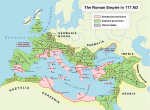 | |
† Italy was never constituted as a province, instead retaining a special juridical status until Diocletian's reforms. | ||


