Argenteuil
Argenteuil | ||
|---|---|---|
Subprefecture and commune | ||
 The Pont d'Argenteuil over the River Seine | ||
| ||
 Location (in red) within Paris inner and outer suburbs | ||
Location of Argenteuil | ||
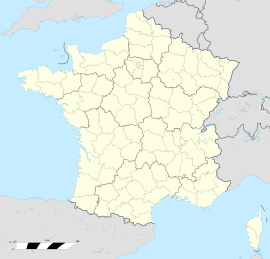  Argenteuil Location (in red) within Paris inner and outer suburbs Show map of France 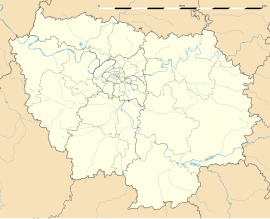 Argenteuil Argenteuil (Île-de-France (region)) Show map of Île-de-France (region) | ||
| Coordinates: 48°57′00″N 2°15′00″E / 48.9500°N 2.2500°E / 48.9500; 2.2500Coordinates: 48°57′00″N 2°15′00″E / 48.9500°N 2.2500°E / 48.9500; 2.2500 | ||
| Country | France | |
| Region | Île-de-France | |
| Department | Val-d'Oise | |
| Arrondissement | Argenteuil | |
| Canton | Argenteuil-1 Argenteuil-2 Argenteuil-3 | |
| Intercommunality | Métropole du Grand Paris EPT Boucle Nord Seine | |
| Government | ||
| • Mayor .mw-parser-output .nobold{font-weight:normal} (2014-2020) | Georges Mothron | |
| Area 1 | 17.22 km2 (6.65 sq mi) | |
| Population (2015)2 | 110,388 | |
| • Density | 6,400/km2 (17,000/sq mi) | |
| Time zone | UTC+01:00 (CET) | |
| • Summer (DST) | UTC+02:00 (CEST) | |
INSEE/Postal code | 95018 /95100 | |
| Elevation | 21–167 m (69–548 ft) | |
1 French Land Register data, which excludes lakes, ponds, glaciers > 1 km2 (0.386 sq mi or 247 acres) and river estuaries. 2Population without double counting: residents of multiple communes (e.g., students and military personnel) only counted once. | ||

Argenteuil (French pronunciation: [aʁʒɑ̃tœj];  Argenteuil (help·info)) is a commune in the northwestern suburbs of Paris, France. It is located 12.3 km (7.6 mi) from the center of Paris. Argenteuil is a sub-prefecture of the Val-d'Oise department, the seat of the arrondissement of Argenteuil.
Argenteuil is the second most populous commune in the suburbs of Paris (after Boulogne-Billancourt) and the most populous one in the Val-d'Oise department, although it is not its prefecture, which is shared between the communes of Cergy and Pontoise.
Argenteuil shares borders with communes in 3 departements others than Val d'Oise : the Yvelines, Hauts-de-Seine and Seine-Saint-Denis departements.
Contents
1 Name
2 History
3 Personalities
4 Transport
5 Education
6 Population
6.1 Immigration
7 Famous paintings of Argenteuil
7.1 Gallery
8 See also
9 References
10 External links
Name
The name Argenteuil is recorded for the first time in a royal charter of 697 as Argentoialum, from a Latin/Gaulish root argento meaning "silver", "silvery", "shiny", perhaps in reference to the gleaming surface of the river Seine, on the banks of which Argenteuil is located, and from a Celtic suffix -ialo meaning "clearing, glade" or "place of".
History

The Seine at Argenteuil, 1873 by Claude Monet
Argenteuil was founded as a convent in the 7th century (see Pierre Abélard and the Convent of Argenteuil). The monastery that arose from the convent was destroyed during the French Revolution.
A rural escape for Parisians, it is now a suburb of Paris. Painters made Argenteuil famous, including Claude Monet, Jean-Étienne Delacroix, Auguste Renoir, Gustave Caillebotte, Alfred Sisley and Georges Braque.
Personalities
Fabien Ateba, basketball player
Franck Beria, footballer
Georges Braque, 3 May 1882, Co-founder of cubism and sculptor
Ingrid Chauvin, (b. 3 October 1971), French actress
Chevalier d'Argenteuil, (fl. in Newfoundland, Canada 1709-13), French soldier; he captured Fort William at St. John's, Newfoundland in 1709
Sidney Duteil television host
Ibrahim Gary, karateka
Alexandre Ndoye, basketball player
Transport
Argenteuil is served by two stations on the Transilien Paris – Saint-Lazare suburban rail line: Argenteuil and Val d'Argenteuil.
The French transport system is straightforward to navigate, so Argenteuil is also an ideal city where there is an extensive public transport system with stations in Argenteuil and Val d'Argenteuil, where the train stops at Transilien Paris. Saint-Lazare (line J).
Since redeveloped by STIF and SNCF, Argenteuil has been equipped with a new Paris-Saint-Lazare-Ermont-Eaubonne line. The new line was launched in 2006, adding the Paris-Saint Lazare / Cormeilles-en-Parisis - Pontoise / Mantes-la-Jolie service to Paris for about ten minutes.
By Bus* :[1]
361 Gare d'Argenteuil à Gare de Pierrefitte - Stains RER;
140 Gare d'Argenteuil - Asnières-Gennevilliers - Gabriel Péri;
164 Argenteuil - Claude Monet College - Porte de Champerret;
By train* :
Gare d'Argenteuil(SNCF-J): Paris Saint-Lazare in 15 minutes and Colombes in 4 minutes
Gare Saint-Gratien (T-8): Porte Maillot in 22 minutes
Epinay Orgemont (T-8): Gare Saint-Denis in 20 minutes
Travel by car:
City Center: 10 minutes;
Paris Saint-Lazare: 25 minutes
La Défense: 20 minutes;
Colombes: 10 minutes;
la Plaine-Saint-Denis: 18 minutes;
Porte de Clichy: 15 minutes;
Education
As of 2016[update] the commune's schools have over 12,000 students. The commune has:[2]
- 30 public preschools (maternelles) and one private elementary school with a preschool[3]
- 26 public and 2 private elementary schools[4]
- 11 junior high schools (collèges) - 10 public and 1 private[5]
- 6 senior high schools/sixth-form colleges:[6]
- Lycée Georges Braque
- Lycée Cognacq-Jay
- Lycée Julie-Victoire Daubié
- Lycée Jean Jaurès
- Lycée Fernand et Nadia Léger
Ecole nationale des professions de l'automobile (private)
Paris 13 University serves as the area university.[7]
The Conservatoire à rayonnement départemental de Musique, Danse et Théâtre is located in Argenteuil.[8]André Bon is one of its former students.
Population
| Historical population | ||||||||||||||||||||||||||||||||||||||||||||||||||||||||||||||||||||||||||||||||||||||||||||||||||||||||||||||||||||
|---|---|---|---|---|---|---|---|---|---|---|---|---|---|---|---|---|---|---|---|---|---|---|---|---|---|---|---|---|---|---|---|---|---|---|---|---|---|---|---|---|---|---|---|---|---|---|---|---|---|---|---|---|---|---|---|---|---|---|---|---|---|---|---|---|---|---|---|---|---|---|---|---|---|---|---|---|---|---|---|---|---|---|---|---|---|---|---|---|---|---|---|---|---|---|---|---|---|---|---|---|---|---|---|---|---|---|---|---|---|---|---|---|---|---|---|---|
|
|
| ||||||||||||||||||||||||||||||||||||||||||||||||||||||||||||||||||||||||||||||||||||||||||||||||||||||||||||||||||
Immigration
| |||||||||||||||||||
Famous paintings of Argenteuil

In his 1872 painting, Springtime, Monet was interested in studying how unblended dabs of color could suggest the effect of brilliant sunlight filtered through leaves[9] The Walters Art Museum.
- By Claude Monet:
Autumn at Argenteuil, Regatta at Argenteuil, Red Boats, Argenteuil, The Bridge at Argenteuil, The Port at Argenteuil, The Seine at Argenteuil, View of Argenteuil-Snow, Bords de la Seine a Argenteuil, and Snow at Argenteuil.
- By other painters:
Argenteuil and Seine near Argenteuil by Édouard Manet, Regatta at Argenteuil by Pierre-Auguste Renoir, and The Bridge in Argenteuil by Gustave Caillebotte.
Gallery

Claude Monet - The Seine at Argenteuil, 1874

Édouard Manet — Argenteuil, 1875

Claude Monet - Bords de la Seine à Argenteuil, 1875

Édouard Manet — The Seine near Argenteuil, 1874


See also

- Communes of the Val-d'Oise department
References
- INSEE
Association of Mayors of the Val d’Oise (in French)
^ "Acheter l'appartement Argenteuil - La Ville" (in French). Retrieved 2018-06-02..mw-parser-output cite.citation{font-style:inherit}.mw-parser-output .citation q{quotes:"""""""'""'"}.mw-parser-output .citation .cs1-lock-free a{background:url("//upload.wikimedia.org/wikipedia/commons/thumb/6/65/Lock-green.svg/9px-Lock-green.svg.png")no-repeat;background-position:right .1em center}.mw-parser-output .citation .cs1-lock-limited a,.mw-parser-output .citation .cs1-lock-registration a{background:url("//upload.wikimedia.org/wikipedia/commons/thumb/d/d6/Lock-gray-alt-2.svg/9px-Lock-gray-alt-2.svg.png")no-repeat;background-position:right .1em center}.mw-parser-output .citation .cs1-lock-subscription a{background:url("//upload.wikimedia.org/wikipedia/commons/thumb/a/aa/Lock-red-alt-2.svg/9px-Lock-red-alt-2.svg.png")no-repeat;background-position:right .1em center}.mw-parser-output .cs1-subscription,.mw-parser-output .cs1-registration{color:#555}.mw-parser-output .cs1-subscription span,.mw-parser-output .cs1-registration span{border-bottom:1px dotted;cursor:help}.mw-parser-output .cs1-ws-icon a{background:url("//upload.wikimedia.org/wikipedia/commons/thumb/4/4c/Wikisource-logo.svg/12px-Wikisource-logo.svg.png")no-repeat;background-position:right .1em center}.mw-parser-output code.cs1-code{color:inherit;background:inherit;border:inherit;padding:inherit}.mw-parser-output .cs1-hidden-error{display:none;font-size:100%}.mw-parser-output .cs1-visible-error{font-size:100%}.mw-parser-output .cs1-maint{display:none;color:#33aa33;margin-left:0.3em}.mw-parser-output .cs1-subscription,.mw-parser-output .cs1-registration,.mw-parser-output .cs1-format{font-size:95%}.mw-parser-output .cs1-kern-left,.mw-parser-output .cs1-kern-wl-left{padding-left:0.2em}.mw-parser-output .cs1-kern-right,.mw-parser-output .cs1-kern-wl-right{padding-right:0.2em}
^ "établissements scolaires." Argenteuil. Retrieved on September 6, 2016. "Plus de 12 000 élèves prennent le chemin de l’école tous les matins."
^ "Les maternelles." Argenteuil. Retrieved on September 6, 2016.
^ "Liste des écoles élémentaires d'Argenteuil." Argenteuil. Retrieved on September 6, 2016.
^ "Les collèges." Argenteuil. Retrieved on September 6, 2016.
^ Home. Argenteuil. Retrieved on September 6, 2016.
^ "Université Paris 13." Argenteuil. Retrieved on September 6, 2016.
^ "Argenteuil Conservatory". Archived from the original on 2008-11-18. Retrieved 2009-08-28.
^ "Springtime". The Walters Art Museum.
External links
 | Wikimedia Commons has media related to Argenteuil. |
Official website (in French)
Official facebook (in French)
 Communes in the Paris metropolitan area Communes in the Paris metropolitan area | |
|---|---|
| Population over 2 million |
|
| Population over 100,000 |
|
| Population over 75,000 |
|
| Population over 50,000 |
|
| Population over 25,000 |
|
| Population under 25,000 |
|
Communes of the Val-d'Oise department  | |
|---|---|
|


